Changes everything... without changing everything
BI-PARTISAN…. BOTH Democrat and Republican STATE Legislators worked together to write this...
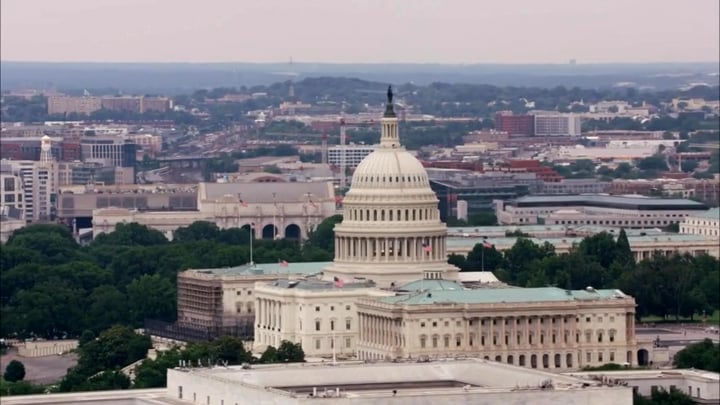
Ensures the people back home are the MOST important consideration in Washington DC….
Changes everything without changing everything.
March 25, 2026 Statement From the group of State Legislators who drafted the Amendment to Reform Congress:
We began this effort five years ago with a group of BOTH Democrat and Republican STATE Legislators who realized not only was Congress broken as an institution but that Congress will never reform itself.
Many do not realize that the ONLY people under the Constitution authorized to REFORM CONGRESS when Congress will NOT reform itself are the (apx) 7500 STATE legislators in the fifty states. No one else can do it.
As such, VERY quietly and meticulously, we began drafting the 28th Amendment, knowing doing so publicly would bring the lobbying industry down on us to crush the effort. So, we kept it secret for all intents until it was completed.
We are experienced lawmakers, and we knew this effort cannot, in the least, be partisan or political. It is impossible to get a Constitutional Amendment passed that involves anything partisan. It takes 3/4ths of the state legislatures to agree to a Constitutional Amendment, so we created this 28th Amendment purposefully to NOT be a political effort.
Our guiding principle was always: CONSENT OF THE PEOPLE. That is the priority in every clause.
We did our homework, left our politics at the door, and worked on something we believe is remarkable FOR the American people that excludes any of the modern day political wrangling that too often prevents good ideas from becoming law.
This effort truly is where Americans came together from BOTH sides of the aisle at the STATE LEVEL to attempt an honest improvement to our system.
In short: it ends lobbying donations in DC outright. Congress has to get ALL their campaign money, and so does everyone else who wants to influence a campaign, DIRECTLY and ONLY from registered voters in that district who are qualified to vote in THAT election. This provision forces Congress to prioritize the people back home- not Washington DC nor the money kickback game that goes on.
It ends Billionaires buying elections and Lobbyists unfairly leveraging money against citizen priorities. Further, every registered voter is equally entitled to spend $4,000 per election per candidate and no more, including the candidates themselves.
It requires Congress pass the annual budget on time and complete or they lose their salary and their name may not appear on the next election ballot- they fire themselves if they don't do the job.
It requires the Federal government to ASK THE PEOPLE FIRST to increase immigration in a state, giving states the option of more or less.
It requires Congress to obtain the CONSENT of the people back home before instituting sweeping legislation via a simple process where we all "try it on" before we buy it, so to speak. In other words- THE PEOPLE become a check and balance on Congress in a customized manner (SECTION 3).
Congress is banned from exempting themselves from laws. It also requires Congress place their financial holdings in blind trusts, and it finally imposes term limits of 12 years. 37 states already have term limits. There is no reason Congress should be exempt.
It requires Congress to operate a MORE RESPONSIVE Federal Government without altering our democratic foundations. In fact, it makes our democracy better by course correcting just enough to realign DC priorities with THE PEOPLE. Again, regardless of your party preferences, it FORCES Congress to come back to the people for approval not just at election time, but when they need money to run again.
We realize the lobbying industry and certain groups, including Congress members will strongly oppose this effort. That goes without saying.
As such, this effort will require we stick together on BOTH SIDES of the aisle at the State level.
If you would like to help or contribute or volunteer to make this a success please email: info@task28.com until the "How YOU can help" section is up and running on the website.
We are volunteers. There is no funding behind this effort- ON PURPOSE. We’re working our tails off to get this site up and running fully. Please bear with the site chaos at the moment.
In short, with enough help, the 28th Amendment to REFORM CONGRESS can be in the Constitution in 18 months if we get moving.
Thus far we have ZERO opposition from STATE legislators who have reviewed this in detail and are committed to sponsoring the resolution with BOTH Democrats and Republican STATE legislators in their chambers on board.
This truly is the first ever Bi-partisan State legislator commenced and DRAFTED Constitutional Amendment to REFORM CONGRESS. The text is below. We are putting together the explanatory videos to make the legal language understandable. They should appear here soon enough.
-Team 28, March 25, 2026
28th Amendment to the Constitution of
the United States of America
SECTION 1 – PURPOSE
Clause 1 – Purpose:
The purpose of this Amendment is to guarantee citizens the right to exercise practical consent to be governed by vesting in the people, through their respective legislatures, the power to check and balance certain Federal functions subject of this Amendment. In furtherance of securing these rights, and in order to establish more inclusive diversity of Federal representation throughout the nation, citizens are guaranteed the right to exclusive funding influence in Federal election contests within their respective Congressional Districts.
SECTION 2 – ELECTION EXPENDITURE EQUITY
Clause 1 – Election Expenditures:
Only a United States citizen registered and lawfully qualified to vote in the House of Representatives district election contest, or in the State election contest for United States Senate or President, may contribute or expend currency or in-kind consideration to influence the election contest for the United States House of Representative held in that district, or the election contest for the United States Senate or President held in that State.
Such expenditure or contribution is permitted only with currency or in-kind consideration lawfully earned by that citizen in an amount not to exceed four thousand dollars ($4,000) for each candidate in each primary, general, or runoff election.
Every five (5) years subsequent to the ratification of this Amendment, the legislature of each State may by statute, alter the initial limitation amount of four thousand dollars ($4,000) by no more than five percent (5%).
No person or entity shall provide currency or in-kind consideration to another person or entity with the intent to evade or circumvent expenditure or contribution restrictions of Section 2 of this Amendment. Any organization or entity accepting currency or in-kind consideration used to influence an election shall report to the Attorney General of the state, all such donations collected and expended no later than fifteen days (15) after the election contest ends, and the Attorney General of the State shall ensure such information is public record.
An “election contest” begins one-hundred twenty (120) days prior to the date of an election or the date on which an individual lawfully files as a candidate, whichever is sooner. An election contest ends the day after the election is held.
A State may, by statute consistent with Section 2 of this Amendment, implement and enforce this Section 2.
SECTION 3- ACTS OF CONGRESS ADVISORY
Clause 1 – Certain Federal Acts of Law Advisory:
Subsequent to ratification of this Amendment, all new Federal law passed in accordance with Article I, Section 7 of the Constitution, applicable or partly applicable within the several States, shall be unenforceable within a State unless the legislature of a State, by resolution approved by its legislature, expressly authorizes enforcement of the entirety of that Federal law by the Federal government within that State. If the legislatures of three-fifths (3/5ths) of the several States adopt resolutions expressly authorizing enforcement of the entirety of the same Federal law within their respective jurisdictions, the entirety of that Federal law shall thereafter be enforceable by the Federal Government within all States.
Clause 2 – Federal Acts or Law not Applicable to States:
Subsequent to ratification of this Amendment, all other new Federal acts or law passed, not applicable or partly applicable within the several States, shall be void upon a majority of the legislatures of the several States approving a substantively identical resolution to void the entirety of that Federal law.
The requirements imposed by Clause 2 of Section 3 of this Amendment shall not apply to:
(a). any rule, proceeding, or internal order adopted by either House of Congress for the governance of its own members or proceedings;
(b). any joint or concurrent resolution of Congress that does not have the force or effect of law;
(c). any bill or joint resolution whose sole or primary purpose is to provide for the ordinary administrative, ministerial, or operational functions of the Executive Branch, either House of Congress, or their respective offices, committees, or agencies;
(d). any declaration of war or authorization for the use of military force; or
(e). any nomination by the President of the United States, provided however, nominations by the President shall be finally voted upon by recorded vote of all Senators no later than thirty (30) calendar days after the date on which such nomination is formally transmitted to the Senate by the President. Failure to conduct such final vote within the prescribed period shall constitute confirmation of the nominee.
Clause 3 – State Repeal of Federal Law :
Any Federal law or provision thereof enacted prior to ratification of this Amendment is repealed and made void upon three-fifths (3/5ths) of the legislatures of the several States approving an identical resolution of repeal initiated by any state.
Clause 4 – Two-Thirds of States Approve Treaties:
Subsequent to ratification of this Amendment, treaties approved by the Senate shall be void and unenforceable unless two-thirds (2/3rds) of the legislatures of the several States approve the treaty by resolution.
SECTION 4 – CERTAIN FEDERAL REGULATIONS ADVISORY
Clause 1 – Certain Federal Regulations Advisory:
Subsequent to ratification of this Amendment, all Federal regulations not excluded under Clause 3 of Section 4 of this Amendment and newly entered into the Code of Federal Regulations or its equivalent, are advisory and shall be not be enforced by the Federal Government within a State or upon non-military Federal public lands within a State, unless the legislature of a State, by resolution, expressly authorizes enforcement of such Federal regulation or provision thereof within that State. If the legislatures of three-fifths (3/5ths) of the several States adopt identical resolutions expressly authorizing the enforcement of the same Federal regulation or provision thereof within their respective jurisdictions, that Federal regulation or provision thereof shall thereafter be enforceable by the Federal Government within all States and non-military Federal public lands.
Clause 2 – State Repeal of Federal Regulations:
Any Federal regulation or provision thereof is repealed and made void upon a majority of the legislatures of the several States approving an identical resolution of repeal initiated by any State. Such regulations may remain enforceable in a State only if a State, by resolution of its legislature, expressly requests the Federal government continue to enforce that regulation within that State.
Clause 3 – Federal Regulations Exempt from this Section:
Subsequent to ratification of this Amendment, Federal Regulations promulgated by the following enumerated Federal entities entered into the Code of Federal Regulations or its equivalent, are exempt from Clause 1 of Section 4, of this Amendment if such regulation issued by any of the following agencies is demonstrably supported by clear and convincing scientific evidence sufficient to justify the specific regulatory requirement, or is an emergency regulation not to exceed ninety (90) days duration.
1. Food and Drug Administration regulations
2. Centers for Disease Control and Prevention regulations
3. National Institutes of Health regulations
4. Food Safety and Inspection Services regulations
5. Animal and Plant Health Inspection Service regulations
6. Federal Aviation Administration regulations
7. Federal Motor Carrier Safety Administration regulations
8. National Highway Safety Traffic Administration regulations
9. Federal Railroad Administration regulations
10. Pipeline and Hazardous Materials Safety Administration regulations
The aforementioned list may be altered by law passed by Congress and signed by the President, or otherwise enacted, if the legislatures of three-fifths (3/5ths) of the several States adopt resolutions expressly authorizing such alteration.
Clause 4 – Military and Federal Employees Exempt:
All regulations or orders of the President governing the military and employees of the Federal government are exempted from Section 4 of this Amendment.
Clause 5 - Prohibition on Interstate Harm:
No State may cause demonstrable harm to one or more other States. For the purposes of this Section 4 of this Amendment:
(a). "Demonstrable harm" means tangible, measurable injury to public health or safety.
(b). Such harm must be proven by clear and convincing scientific evidence.
(c). The burden of proving demonstrable harm shall lie with the party asserting it.
SECTION 5 – APPROPRIATIONS
Clause 1 – Mandatory Passage of Appropriation Acts:
Congress shall pass thirteen (13) separate Appropriations Acts for each fiscal year by a simple majority vote in both the House of Representatives and the Senate on or before September 30th. The House shall pass and transmit the thirteen (13) separate Appropriations Acts to the Senate on or before August 1 of each year.
The 13 Appropriations Acts shall be:
Department of Agriculture Appropriations Act
Department of Commerce and Department of Justice Appropriations Act
Department of Energy Appropriations Act
Department of Homeland Security Appropriations Act
Department of the Interior Appropriations Act
Department of Labor, Department of Health and Human Services, Department of Education Appropriations Act
Legislative Branch Appropriations Act
Department of Veterans Affairs Appropriations Act
Department of State Appropriations Act
Department of Transportation and Department of Housing and Urban Development Appropriations Act
Department of the Treasury Appropriations Act
Department of Defense Appropriations Act
Foreign Aid Appropriations Act
Clause 2 – Content of Appropriations Acts:
Each Appropriation Act must:
(a). Designate the amount and describe the purpose of each individual appropriation within the Act.
(b). Designate the tax, revenue, or other funding mechanism for each individual appropriation within the Act.
(c). Not contain any law, rule, or regulation.
(d). Not contain any mandate or provision requiring states to alter, enact, enforce, or repeal a state law, rule, regulation, or policy.
(e). Not contain, authorize, or facilitate directly or indirectly any appropriation, allocation,
transfer, grant, loan, guarantee, contract, sub-grant, reimbursement, credit, in-kind
contribution, or any other form of financial or non-financial assistance, whether disbursed
through a U.S. federal agency, U.S. state or local government, U.S. non-profit
organization, U.S. private entity, international organization, or any other pass-through or
mechanism, to or for the benefit of any foreign government, foreign
governmental entity, foreign political party, foreign public international organization, or
any other foreign person or entity, unless such assistance is exclusively and solely
contained within the “Foreign Aid Appropriations Act”.
Clause 3 – Prohibited Appropriations:
The revenues, surpluses, and expenditures of the Federal Old-Age and Survivors Insurance Trust Fund, the Federal Disability Insurance Trust Fund, the Federal Hospital Insurance Trust Fund, and the Federal Supplementary Medical Insurance Trust Fund (hereinafter referred to as the "Protected Trust Funds") shall be excluded from all calculations of the federal budget, deficit, or surplus. These funds shall be managed independently of the general fund of the Treasury and shall not be used to offset or finance any other federal expenditure.
Surpluses in the Protected Trust Funds shall not be invested in obligations issued by the United States government or any agency thereof. Existing holdings in government securities shall be redeemed and reinvested in accordance with this section and in a manner prescribed by law over a period not exceeding ten years from the effective date of this Amendment.
No funds from the Protected Trust Funds may be expended, transferred, loaned, pledged, borrowed against, or otherwise obligated, directly or indirectly, for any purpose other than the payment of benefits to eligible recipients and necessary administrative costs, as authorized by statutes in effect at the time of ratification. Any attempt to use these funds for other purposes shall be void and unenforceable.
The Congress shall enforce and implement this article by appropriate legislation approved by the States in accordance with Section 3 of this Amendment.
Clause 4 – Automatic Sanctions for Failure to Transmit:
If any of the thirteen (13) Appropriations Act for the forthcoming fiscal year have not, by September 30th, been transmitted to the President, no member of Congress may appear on any election contest ballot for Federal office until after their present term will expire and an election contest to replace the member has been completed.
Clause 5 – Contingent Resolution:
On or before September 30th of each year, the Secretary of the Treasury shall publish a comprehensive and accurate document listing all appropriations either passed by Congress and signed by the President or otherwise enacted from October 1 of the prior year through October 1 of the current year. The document shall be entitled “The Contingent Resolution”.
In the event Congress fails to pass and transmit to the President, on or before September 30th, all thirteen (13) Appropriation Acts for the ensuing fiscal year, then beginning October 1st, the Secretary of the Treasury shall:
(a). administer the expenditures set forth in The Contingent Resolution in the amounts and for the purposes specified therein without alteration in amounts or purpose except as expressly required by existing law or binding obligation on the United States, including service of debt; and
(b). borrow funds or otherwise obligate the United States Treasury as necessary to cover funding shortfalls arising from the administration of The Contingent Resolution or part thereof: and
(c). shall continue to exercise the authority to administer the Contingent Resolution in full force and effect until the President signs all 13 Appropriations Acts or they are enacted otherwise, or the legislatures of the several States adopt substitute Appropriations Acts in accordance with Clause 6, Section 4 of this Amendment.
Clause 6 – Presidential Veto:
If, on October 1st, one or more of the thirteen (13) regular Appropriations Acts for that fiscal year has not been signed by the President, enacted otherwise, or enacted by the several States in accordance with sub-section (b) of this Clause 6, then:
(a). The Secretary of the Treasury shall continue to implement the Contingent Resolution until the enactment of the missing Appropriation Act or the end of that fiscal year (September 30th).
(b). Any State legislature may propose a substitute Appropriation Act for any missing regular Appropriation Act. If three-fifths (3/5ths) of the legislatures of the several States adopt identical concurrent resolutions approving the full text of such proposed Act (or Acts), each approved Act shall become enforceable with the same effect as an Act of Congress passed by both Houses and signed by the President. Any substitute Appropriations Act approved by the several States under this clause shall remain in effect until the end of that fiscal year (September 30).
Clause 7 – Altering Appropriations Acts:
The number or scope of Appropriations Acts may be changed only by a majority vote in both the House of Representatives and the Senate, signed by the President, or enacted otherwise, and approved by concurrent resolution of three-fifths (3/5ths) of the legislatures of the several States.
Clause 8 – Foreign Aid Appropriations Act:
The Foreign Aid Appropriations Act shall be unenforceable and void unless, within one-hundred and twenty (120) days following its transmittal by Congress or the President to the legislatures of the several States, it is approved by concurrent resolution of three-fifths (3/5ths) of the legislatures of the several States, or in the manner prescribed by subsection (b), Clause 6, Section 5 of this Amendment.
Clause 9- Emergency Appropriations:
Congress and the President may petition the States for emergency appropriations. The appropriation requested must comply with Clause 2 and 3 of Section 5 of this Amendment and shall finally be enacted upon concurrent resolution approved by three-fifths (3/5ths) of the legislatures of the several States under rules each State devises.
SECTION 6 – IMMIGRATION- ASK FIRST REQUIREMENT
Clause 1 – State Consent Required:
A non-citizen of the United States may not remain within the United States for more than ninety (90) consecutive days without prior authorization from the legislature of a State, and any non-citizen so authorized by a State shall remain solely within the borders of that State unless and until granted express prior authorization from the legislature of another State to enter therein.
Except in the event the President, Secretary of State, a court, or other entity empowered by law to order the removal of a non-citizen located within the United States, each State legislature shall retain full discretionary authority to regulate or revoke a State’s authorization granted to a non-citizen to enter or remain, including the movement, activities, and conduct of non-citizens within the borders of a state. Upon revocation of authorization by a state legislature for any non-citizen not otherwise exempt under this section, the Federal Government shall ensure the removal of such non-citizen to a location outside the United States within thirty (30) days.
This Section 6 of this Amendment shall not apply to non-citizen employees of a foreign government expressly authorized by the United States to perform official diplomatic duties for a specified duration.
SECTION 7 - TERM LIMITS
No person shall be eligible to serve as a Senator for more than two terms, whether consecutive or non-consecutive, and no person shall be eligible to serve as a Representative for more than six terms, whether consecutive or non-consecutive. Service for more than one-half of a term shall count as a full term for the purposes of this section.
This article shall not apply to any person who has begun a term in the Senate or House of Representatives prior to the ratification of this Amendment, except that any such subsequent service shall be counted toward the limits.
SECTION 8 –BLIND TRUST REQUIRED- EXEMPTIONS OF LAW PROHIBITED:
Clause 1- Blind Trust:
No Senator or member of the House of Representatives, shall purchase, sell, trade, direct, recommend any stock, bond, commodity, futures contract, option, currency, or other financial instrument, whether for the member’s personal account or on behalf of another.
Prior to taking the oath of office, every Senator and Representative shall divest all holdings in individual stocks, bonds, commodities, futures, options, or other financial instruments by transferring such assets into a qualified blind trust. The trust shall be managed by an independent trustee with no prior relationship to the officeholder, and the officeholder shall have no knowledge of, or control over, the specific assets held or transactions executed during their term.
A “qualified blind trust” shall be a trust certified by the Office of Government Ethics as meeting the requirements of this Section 7 of this Amendment, including insulation from the officeholder’s direction or information.
Congress shall have power to enforce this article by appropriate legislation, including civil penalties and removal from office for willful violation.
Clause 2 - Equal Application of Law to Congress:
No law shall exempt any Member or employee of Congress from any law.
SECTION 9 - STATIM REPEAL
Within two years after the ratification of this Amendment, the legislature of any State may adopt a resolution calling for the repeal of this Amendment in its entirety and directing that such resolution be circulated to the legislatures of the several States. If, within one hundred twenty (120) days following the date on which the initiating resolution is circulated to the legislatures of the several States, the legislatures of three-fourths (3/4) of the several States adopt resolutions identical in text calling for the repeal of this Amendment in its entirety, then this Amendment shall be repealed and shall be void and of no effect from and after the date on which the requisite number of such resolutions has been adopted.
For the purposes of accommodating consideration by the several States of this Section 9 option to repeal notwithstanding any State Constitution, law, or rule, the legislatures of the several States are empowered to adopt rules and procedures to facilitate consideration of this Section 9 in the manner each State legislature deems appropriate, including the right of each legislature to conduct a vote, convene and fund a special session without Gubernatorial approval, conduct a special polling or vote of the members of a state legislature, or a conduct a meeting to vote on this Section 9 using electronic technology.
SECTION 10 – MANDATORY MEETING OF THE STATES, FUTURE MEETINGS OF THE STATES
Clause 1 -Mandatory Corrective Meeting:
On a date between the third and fourth anniversaries of the ratification of this Amendment, selected pursuant to procedures established by concurrent resolution of the states, the legislatures of the several States shall convene a mandatory Meeting of the States, unless 2/3rds of the several States approve a resolution rejecting the Mandatory Corrective Meeting of the States.
Clause 2 – Purpose of Mandatory Meeting:
The exclusive purpose of the Mandatory Meeting of the States shall be to propose technical corrections, revisions, or repeal of provisions of this Amendment. Only provisions of this 28th Amendment to the Constitution may be considered at the Mandatory Meeting of the States.
Clause 3 – Adjournment:
The Meeting shall continue until adjourned sine die by the affirmative vote of two-thirds (2/3) of the total number of state delegations present at the Mandatory Meeting of the States.
Clause 4 - Adoption and Ratification of Proposals from the Mandatory Meeting:
(a). Any amendment proposal shall be adopted only by the affirmative vote of three-fourths (3/4) of the state delegations present and voting. Any proposal so adopted shall be transmitted to the several States and shall become part of this Amendment only upon ratification by the legislatures of three-fourths (3/4) of the several States within one (1) year after the date of its adoption at the Meeting. If the proposal is not so ratified within one (1) year, it shall be void.
(b). Notwithstanding any provision of a State’s Constitution, laws, or legislative rules to the contrary, every State legislature is hereby vested with the power to poll its members, even when the legislature is not in formal session, for the sole purpose of approving or rejecting any Amendment duly adopted and submitted for the Mandatory Meeting of the States or for any Future Meetings of the States.
Clause 5 - Plenary State Authority over Funding, Delegations, and Future Meetings of the States:
Notwithstanding any provision of any State Constitution, law, or legislative rule:
(a). Each state legislature is herein vested with absolute and exclusive authority to appropriate funds and incur obligations necessary or convenient to organize, support, attend, or conduct a Meeting of the States;
(b). No Governor or other executive officer may veto, withhold, or condition such appropriations or the appointment of delegates; and
(c). Each state legislature shall appoint its delegation and determine the manner and method of selection, compensation, and instruction of its delegates by resolution, without requirement of gubernatorial approval
Clause 6 - Procedure for Calling Subsequent Meetings of the States:
Notwithstanding Article V of the Constitution of the United States, a Meeting of the States for proposing amendments to the Constitution may be called following the Mandatory Meeting of the States and without the necessity of an application to Congress by the legislatures of two-thirds of the several States whenever the legislatures of at least two-thirds (2/3) of the several States adopt concurrent resolutions that:
(a). contain identical text of one or more proposed amendments to be considered at such Convention; and
(b). specify the method by which the Convention shall be convened, which may be either by the physical assembly of delegates or by secure electronic or other technological means. Upon the adoption of such identical concurrent resolutions by the requisite number of States, the Convention shall be deemed called and shall proceed in accordance with the terms set forth in those resolutions
Clause 7 - Voting Threshold for Transmitting Subsequent Proposals:
No amendment proposed at any Convention of the States, (whether the Mandatory Meeting or any subsequent Meeting), held after the ratification of this Amendment shall be submitted to the several States for ratification unless such proposed amendment has first received the affirmative vote of at least three-fourths (3/4) of the total number of state delegations entitled to vote at that Meeting of the States. For purposes of this requirement:
a). Each of the several States shall have one delegation and one vote;
b). The total number of state delegations entitled to vote shall equal the number of States then comprising the Union; and
c). An affirmative vote of three-fourths (3/4) of such delegations means the affirmative vote of a number of delegations that is not less than seventy-five percent (75%) of the total number of delegations entitled to vote.
d). Only upon satisfaction of this supermajority vote within a Meeting of the States may the proposed amendment be transmitted to the several States for ratification in the manner otherwise provided by Article V of this Constitution.
SECTION XI - ENFORCEMENT and INTERPRETIVE PRINCIPLES
Clause 1 – Standing to Enforce:
A citizen of the United States, the Attorney General of the United States, the Attorney General of any State, or any State Legislature or political subdivision thereof shall have standing to commence a civil action in a United States Court of competent jurisdiction to enforce any provision of this Amendment.
Clause 2 - Interpretive Principles:
This Amendment shall be supreme and controlling over any conflicting provision of the Constitution of the United States, and courts shall interpret, construe, and apply the provisions of this Amendment in the manner that most fully and effectively achieves, advances, and effectuates its purpose, intent, and provisions, without limitation or diminution.
In the event a court dismisses any action commenced in accordance with this Amendment, a court shall provide, in writing, a comprehensive reasoning of the court’s decision on the date of dismissal.
BELOW UNDER CONSTRUCTION
(Template):
5 years in the making - COMPREHENSIVE REFORM- not piecemeal...
Write your text here...
Write your text here...
Ten Reforms - One Amendment
Supporting the 28th Amendment to reform Congress for a fairer future.
Transparency


Ensuring open government with clear accountability to the people.


Accountability
Holding elected officials responsible for their actions and promises.
Empowering citizens to have a stronger voice in government decisions.
Empowerment

Contact
Reach out to support the 28th Amendment cause.
Gallery


Snapshots from our journey toward reform